Blog
Articles, tutorials, and field notes on identity, integration, API management, and application security — spanning nearly two decades of hands-on work.
Articles, tutorials, and field notes on identity, integration, API management, and application security — spanning nearly two decades of hands-on work.
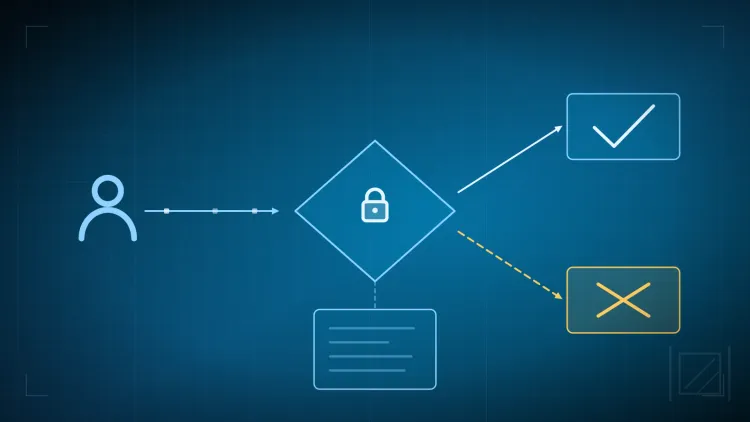
This article continues the J2EE Security Series from the past few months. Here we expand the Simple J2EE Web Application that was introduced in this article to use J2EE Security.
What is a URL? What is a context root? It’s helpful to understand these things when writing or working with web applications.
In order to test J2EE Security with the Security Realm and Openldap User Repository we created in the last article in this series, we need an application to protect. The focus of this article is to create a very simple web application that can be protected by J2EE Security.
The article continues the series discussing J2EE Security and its related concepts. The following brings together the numerous concepts discussed in the past articles.
The discussion of J2EE Security on the JBoss Application Server continues as Role Mapping is introduced.
This article continues our discussion of setting up J2EE Security in a JBoss 4.3.x container. In the last article, we completed the setup of an OpenLdap database that can be used as a User Repository.
This article describes how to setup an OpenLdap server and add inetperson user objects. However, the article didn’t describe how to add groups to OpenLdap and add users to the groups.
I’ve had to look up the HTML codes for special characters like space many times. In fact, while writing blog entries for Thinkmiddleware.com, I’ve had to stop and look up the HTML code for less-than sign and greater-than sign one to many times. I just haven’t bothered memorizing them.
This article explains how to install and start the JBoss “default” server.
Have you ever run snoop on Solaris or tcpdump on Linux or AIX and discovered that these tools cannot capture IP-based communication that occurs between two processes on the same machine? Or, Wireshark (formerly, Ethereal) on Windows? Only to discover the same limitation?
Any time you have a distributed application, there is network communication involved. Capturing this network traffic can be instrumental in diagnosing and solving problems. Generally, to capturing network traffic, superuser privledges, timing, and a bit of luck is needed. Often, the appropriate…
Building on the ideas introduced in the last article, a J2EE Application servers classloaders are explored in this installment. In particular, Websphere Application Server v.6.x Classloaders are introduced. The J2EE Spec provides some guidance regarding J2EE Application Servers, but as with so many…